
Two Sides of a Ditch.
A Meditation on Land and Meaning

Read time is about 4 minutes, you got this.
As you turn a gem1 in your hand, the light bends through the body of the stone, and transforms the room; nothing changes, everything changes, with the subtle shift of the hand. You can turn a lot of things, a body of text, a landform, a memory. This ancient contemplative practice is a way of finding new meaning in the same form.
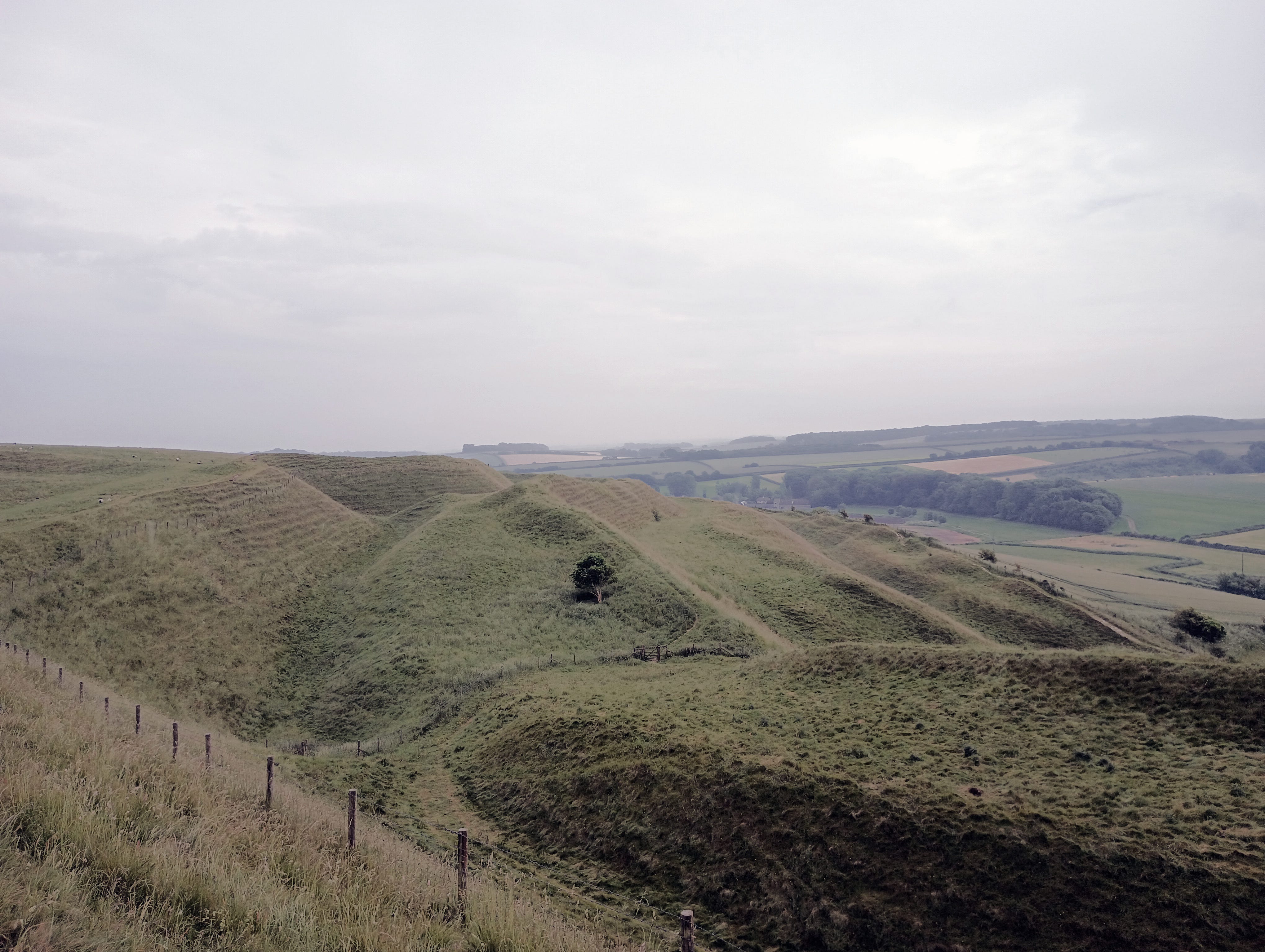
While preparing for my trip to the UK, I found a photograph of these waves of land2, rippling ridges that seemed to conceal a deeper current beneath their meadowy surface. I felt that by treading over these waves, I might uncover a force strong enough to pull me under, to drown me in some sacred truth. I went looking for it.
The waves hadn't changed, the undercurrents had.
Our ancestors dug ditches and piled up berms in circular forms3 as a way of marking off space in a seemingly boundless landscape. There are two ways to build this landform, and they are essentially the same. You can dig the ditch on the inside or, you guessed it, the outside. So, the side you’re standing on is the only real difference.
For thousands of years our ancestors held communal gatherings and sacred ceremonies on the low side of the ditch; it was like a stage in the round, made to bring us together, made for communion.
The tide turned in the Iron age4; conflict surged, fear reshaped the culture, and we discovered a new meaning for the high side of the ditch, defense. Like waves crashing on the shore, these land forms created a rip current, pulling us away from each other. The waves hadn’t changed, the undercurrents had.
clearly designed for war; it wreaked of death
I was looking for cute sheep, families picnicking in breezy wildflower meadows, sun-drenched revelations.
What I found was a haze of spitting rain, wind ripping through the hills, sheep shit everywhere.
There was nothing sacred in this land. It was clearly designed for war; it wreaked of death like weeds thrown up along the shore. A fog of fear choking any hope of revelation from the land. It was quietly devasting.
I turned to face the land, to let it swallow me whole and take me under.
I tread the ridgeline, wind frothing at my ears, drowning my thoughts before they could surface.
I tread the valley, dead silent, spirits lapping at me from the weeds as trespassed over their graves.
As I was tossed in these waves, I became increasingly disoriented, resigned to abandon my hope of revelation; and in a final stroke, I turned to face the land, to let it swallow me whole and take me under.
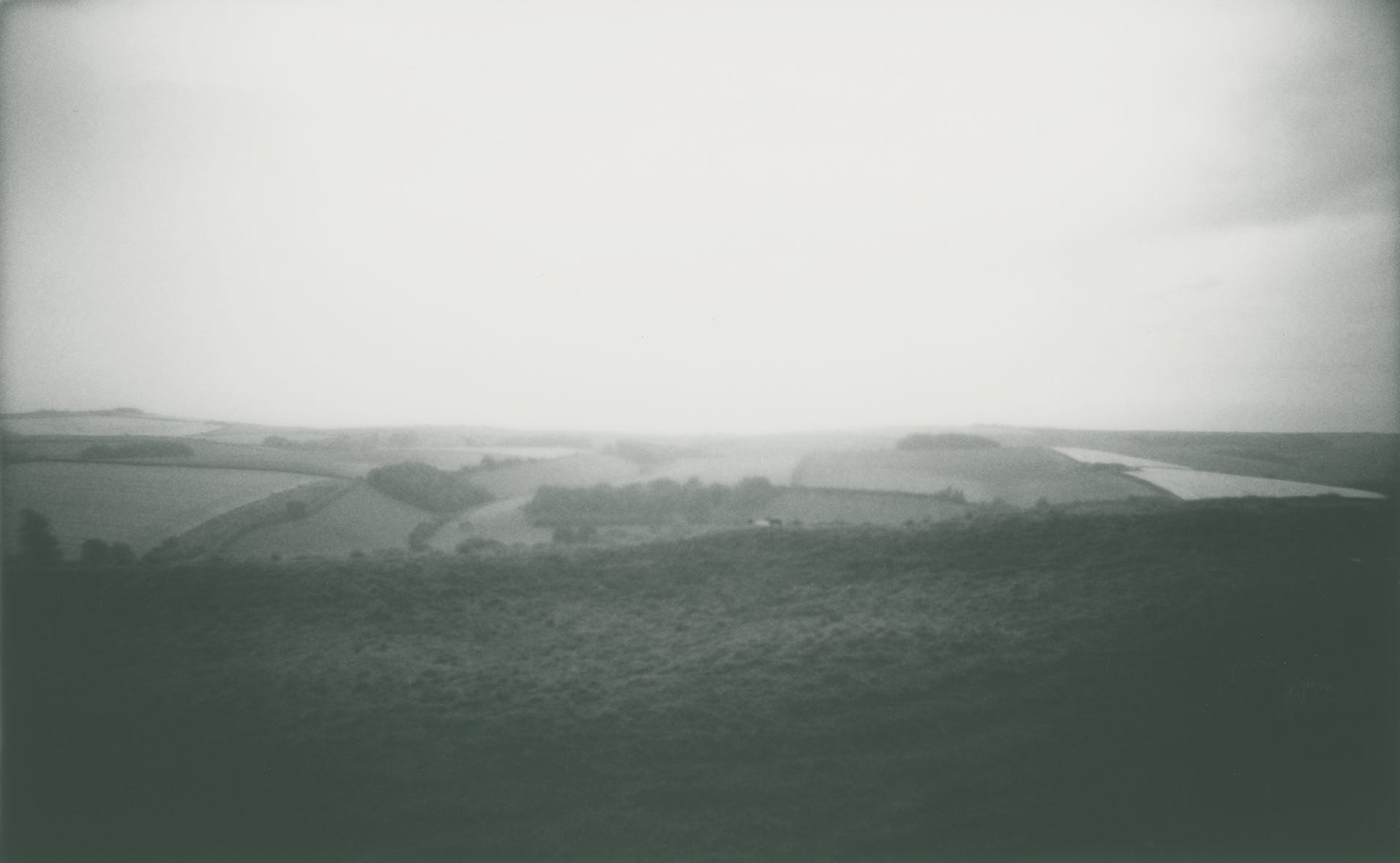
The land flattened before me. The floor beneath, the sky above, all held together in a single composition. Everything I could see, near and far, inside and out, us and them, was foreshortened, dissolved in a single swatch of color; all the disparate parts brought together again as one.
This ditch held two meanings, communion and separation. I came looking for the one that wasn’t there and somehow found what I was after; something sacred, a communion.
a subtle shift of perspective can reveal the meaning we’ve lost or longed for
Multitudes of meaning can surface in a single form. There are two sides of a ditch, after all. Sometimes, if we’re still, a subtle shift of perspective, or a turn of the gem, can reveal the meaning we’ve lost or longed for, the meaning that was always there, just below the surface, waiting to be re-membered to its form5.
Turning the gem comes from the ancient saying: “Turn it, and turn it again, for everything is in it.” It’s about finding new meaning by looking at the same thing from different angles.
Maiden Castle was an ancient hillfort in Dorset, England, one of the largest in Europe. Its massive earthworks were first built for community gatherings and rituals, but later adapted for defense. Archaeologists found signs of violent conflict here, including skeletons with battle wounds, showing how fear and war may have reshaped this sacred place.
Henges, Neolithic earthworks, are typically ceremonial, the ditch lies inside the bank. In contrast, Iron Age hillforts like Maiden Castle feature ditches on the outside, indicating military use.
The advent of iron weapons reshaped social and political life in prehistoric Britain. Communal spaces were fortified, and hierarchical, conflict-driven societies emerged.
A play on “remember” as a reassembling of what’s been dismembered, a healing or reintegration of parts into a whole.